
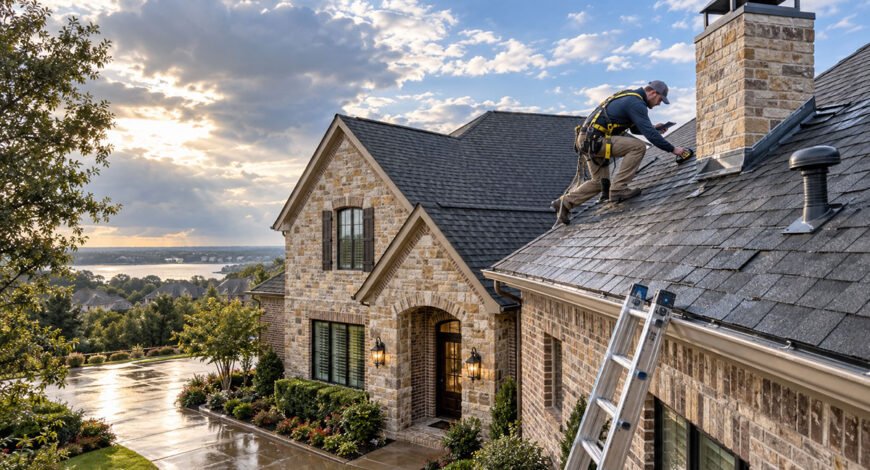
Roof Leaks and Detection: Why a Professional Inspection Matters
A roof leak is one of those home problems that should never be ignored. What starts as a small drip, stain, or soft spot can quickly turn into damaged decking, wet insulation, stained ceilings, mold concerns, and costly interior repairs.
For homeowners in Bedford, Colleyville, Southlake, and across the DFW area, roof leaks are especially important to watch for because North Texas weather can be hard on roofing systems. Hail, high winds, heavy rain, heat, and sudden storms can all expose weak points in a roof.
The challenge is that roof leaks are not always obvious at first. By the time water shows up inside the home, the problem may have been developing for weeks or even months. That is why a professional roof and water damage inspection can be so valuable.
Common Signs of a Roof Leak
Some leaks are easy to spot. Others are subtle. Homeowners should watch for warning signs inside and outside the home.
Common signs of a possible roof leak include brown or yellow stains on ceilings, bubbling paint or drywall, damp insulation in the attic, musty smells, water spots near fireplaces, skylights, or vents, missing or lifted shingles, rusted flashing, exposed fasteners, granules collecting near downspouts, and dripping water during or after heavy rain.
Even a small stain should be taken seriously. Water often travels before it becomes visible, which means the source of the leak may not be directly above the stain.
Where Roof Leaks Often Start
Roof leaks commonly begin around areas where the roofing system has openings, transitions, or flashing details. These include chimneys, valleys, skylights, pipe boots, roof vents, wall transitions, ridge lines, gutters, and roof penetrations.
Storm damage can also loosen shingles, crack sealants, bruise roofing materials, or create impact damage that weakens the waterproof barrier beneath the roof surface. In some cases, the roof covering may not be the only issue. Poor attic ventilation, clogged gutters, damaged decking, or old sealant can also contribute to moisture problems.
A professional inspection looks at the full roofing system, not just one visible symptom.
Detection Techniques That Help Find Hidden Water Damage
Water damage can hide behind ceilings, walls, insulation, and attic framing. That is why advanced detection methods matter.
Charles Martin Roofing & Construction can evaluate roof leaks and water intrusion using inspection methods designed to find problems early. Moisture mapping helps identify areas where drywall, insulation, or framing may have elevated moisture levels. Thermal imaging can detect temperature differences that may point to trapped moisture behind finished surfaces. Attic and interior assessments allow inspectors to check roof decking, rafters, trusses, insulation condition, HVAC penetration points, ceiling discoloration, and bubbling paint.
Leak tracing is another important part of the process. Instead of simply repairing the visible stain, the goal is to locate the source of the water intrusion. That may be failed flashing, storm displacement, wind-driven rain, a roof penetration, damaged shingles, or another vulnerable area.
Why Early Detection Matters
Unchecked water intrusion can lead to serious issues over time, including mold growth, structural wood rot, insulation failure, ceiling damage, and higher repair costs. A roof leak rarely gets better on its own. In most cases, the longer water has access to the home, the more damage it can create.
Early detection can also help homeowners make better decisions. A small repair may be enough if the problem is caught quickly. If the roof has widespread storm damage or aging materials, a larger repair or replacement may be the better long-term solution.
Emergency Roof Leak Response
When water is actively entering your home, quick action matters. Place buckets or containers under active drips, move furniture and valuables away from the affected area, and use towels to help control spreading water.
If water is near electrical fixtures, outlets, or wiring, avoid touching the area and contact the proper emergency professional. Do not climb onto the roof during rain, high winds, lightning, or after dark. Wet roofing materials can be extremely slick, and storm-damaged areas may be unstable.
Charles Martin Roofing & Construction can provide emergency roof leak response for homeowners dealing with active leaks, storm damage, missing shingles, damaged flashing, or roof openings that need immediate attention. In many cases, a temporary repair or protective measure may be needed first to help stop additional water intrusion until a full inspection and permanent repair can be completed.
Inspection Reports You Can Trust
A professional inspection should give you more than a quick opinion. CMRC provides clear photographic documentation, a written condition report, recommended repair or replacement options, and honest guidance. That information can help homeowners understand the condition of the roof and make a confident decision.
It can also be helpful after storm events, especially when homeowners need documentation before deciding whether to contact their insurance company.
When to Schedule a Roof and Water Damage Inspection
Homeowners should schedule an inspection after hail or wind storms, when interior water stains appear, before buying or selling a property, if the roof is 8 to 10 years old or older, before filing an insurance claim, or as part of routine annual maintenance.
For homeowners in Bedford, Colleyville, Southlake, and the surrounding DFW area, Charles Martin Roofing & Construction can inspect your roof, identify possible leak sources, evaluate hidden water damage, and recommend the right repair path.
If you notice stains, moisture, missing shingles, or signs of storm damage, contact Charles Martin Roofing & Construction to schedule a professional roof and water damage inspection.
